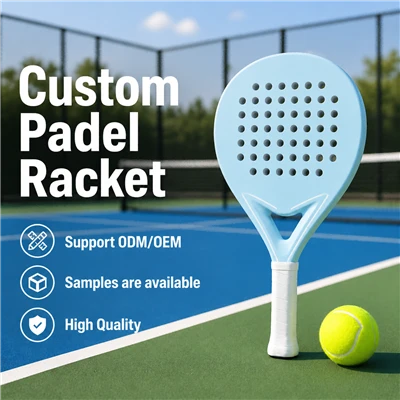
Your Professional Padel Racket Supplier
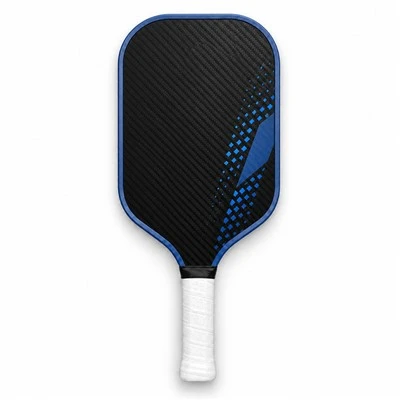
We have rich and professional experience in the racket industry, and continue to improve in technical innovation, quality control, business services and other areas to ensure that our OEM and ODM comprehensive service capabilities.We focus on all kinds of sports rackets, such as Padel rackets, beach tennis rackets, Pickleball paddle, badminton rackets, tennis rackets and other composite products and related accessories.
-
![China Custom Carbon Fiber Surface EVA Core Carbon Frame Padel Racket]() China Custom Carbon Fiber Surface EVA Core Carbon Frame P...This carbon padel racket features carbon fiber face, adjustable‑hardness EVA foam core and reinforced carbon frame. Non‑slip sweat‑proof grip ensures stable holding. It delivers great spin, power and shock absorption. Ideal forread more
China Custom Carbon Fiber Surface EVA Core Carbon Frame P...This carbon padel racket features carbon fiber face, adjustable‑hardness EVA foam core and reinforced carbon frame. Non‑slip sweat‑proof grip ensures stable holding. It delivers great spin, power and shock absorption. Ideal forread more -
![High Quality Professional Round Carbon Fiber Padel Racket]() High Quality Professional Round Carbon Fiber Padel RacketHigh quality professional round carbon fiber padel racket with stylish striped design. Durable solid frame, comes with wrist strap, perfect for adult players in training and competitive games. Custom OEM service available.read more
High Quality Professional Round Carbon Fiber Padel RacketHigh quality professional round carbon fiber padel racket with stylish striped design. Durable solid frame, comes with wrist strap, perfect for adult players in training and competitive games. Custom OEM service available.read more -
![QK Carbon Fiber Surface EVA Core Carbon Frame Padel Racket]() QK Carbon Fiber Surface EVA Core Carbon Frame Padel RacketFull carbon padel racket with adjustable-hardness EVA core, extended sweet spot and shock-absorbing design, mid-balance for consistent shots for all player levels.read more
QK Carbon Fiber Surface EVA Core Carbon Frame Padel RacketFull carbon padel racket with adjustable-hardness EVA core, extended sweet spot and shock-absorbing design, mid-balance for consistent shots for all player levels.read more -
![High Quality Round Shape Carbon Fiber Padel Racket]() High Quality Round Shape Carbon Fiber Padel RacketThis round carbon fiber padel racket features lightweight construction and a sturdy frame. Equipped with wrist strap, ideal for adult players in daily training and competitive matches. Custom logo & design are available.read more
High Quality Round Shape Carbon Fiber Padel RacketThis round carbon fiber padel racket features lightweight construction and a sturdy frame. Equipped with wrist strap, ideal for adult players in daily training and competitive matches. Custom logo & design are available.read more -
![Factory Custom Carbon Fiber Surface EVA Core Carbon Frame Padel Racket]() Factory Custom Carbon Fiber Surface EVA Core Carbon Frame...This carbon fiber padel racket features a carbon fiber frame, EVA inner core, hybrid teardrop shape, wide sweet spot, and anti-vibration throat structure for stable power and excellent control.read more
Factory Custom Carbon Fiber Surface EVA Core Carbon Frame...This carbon fiber padel racket features a carbon fiber frame, EVA inner core, hybrid teardrop shape, wide sweet spot, and anti-vibration throat structure for stable power and excellent control.read more -
![Custom Padel Racquet Diamond Shape 3D Texture High Balance Power Racket]() Custom Padel Racquet Diamond Shape 3D Texture High Balanc...Custom Padel Racquet Diamond Shape 3D Texture High Balance Power RacketThis diamond shape padel racquet is made for a more attacking style of play.read more
Custom Padel Racquet Diamond Shape 3D Texture High Balanc...Custom Padel Racquet Diamond Shape 3D Texture High Balance Power RacketThis diamond shape padel racquet is made for a more attacking style of play.read more -
![Professional Colorful Teardrop Padel Racket]() Professional Colorful Teardrop Padel RacketProfessional teardrop padel racket with vibrant colorful graphic, carbon fiber surface and shock-absorbing EVA core, ideal for padel training and competitive matches.read more
Professional Colorful Teardrop Padel RacketProfessional teardrop padel racket with vibrant colorful graphic, carbon fiber surface and shock-absorbing EVA core, ideal for padel training and competitive matches.read more -
![OEMODM Carbon Fiber 18K Thermoformed Paddle EVA Foam Padel Teardrop Tennis Racket]() OEMODM Carbon Fiber 18K Thermoformed Paddle EVA Foam Pade...Custom OEM/ODM 18K carbon fiber thermoformed teardrop padel racket, built with a high-performance EVA foam core for power and control.read more
OEMODM Carbon Fiber 18K Thermoformed Paddle EVA Foam Pade...Custom OEM/ODM 18K carbon fiber thermoformed teardrop padel racket, built with a high-performance EVA foam core for power and control.read more -
![Carbon Fiber Padel Racquet Teardrop Shape 3D Rough Face Lightweight OEM Manufacturer]() Carbon Fiber Padel Racquet Teardrop Shape 3D Rough Face L...Carbon Fiber Padel Racquet Teardrop Shape 3D Rough Face Lightweight OEM ManufacturerThis teardrop padel racquet is made for players who want a little more power but still need good control during the game.read more
Carbon Fiber Padel Racquet Teardrop Shape 3D Rough Face L...Carbon Fiber Padel Racquet Teardrop Shape 3D Rough Face Lightweight OEM ManufacturerThis teardrop padel racquet is made for players who want a little more power but still need good control during the game.read more -
![Professional Teardrop Carbon Fiber Padel Racket]() Professional Teardrop Carbon Fiber Padel RacketTop quality teardrop shape carbon fiber padel racket with cool splash print, built with shock absorbing EVA core. Great balance of power and control, perfect for intermediate & advanced players for training and matches.read more
Professional Teardrop Carbon Fiber Padel RacketTop quality teardrop shape carbon fiber padel racket with cool splash print, built with shock absorbing EVA core. Great balance of power and control, perfect for intermediate & advanced players for training and matches.read more -
![18K Carbon Fiber Padel Racket Diamond Shape Power Spin Control Racquet]() 18K Carbon Fiber Padel Racket Diamond Shape Power Spin Co...18K Carbon Fiber Padel Racket Diamond Shape Power Spin Control Racquetread more
18K Carbon Fiber Padel Racket Diamond Shape Power Spin Co...18K Carbon Fiber Padel Racket Diamond Shape Power Spin Control Racquetread more -
![Top Quality Teardrop Shape Carbon Fiber Padel Racket]() Top Quality Teardrop Shape Carbon Fiber Padel RacketTop quality teardrop shape carbon fiber padel racket, professional design with durable construction, ideal for intermediate and advanced players for padel training and competition.read more
Top Quality Teardrop Shape Carbon Fiber Padel RacketTop quality teardrop shape carbon fiber padel racket, professional design with durable construction, ideal for intermediate and advanced players for padel training and competition.read more


Why Choose Us
Broad Market
We export products to Europe, Asia, North America, South America. Our products gain wide praises all over the world.
Our Certificate
Follow BSCI quality management system, QUARK SPORTS had been approved by some 3rd party certification bodies and other professional qualification certification.
Our Service
Dedicated to strict quality control and thoughtful customer service, our experienced staff members are always available to discuss your requirements and ensure full customer satisfaction.

Advantages of Padel Racket
Suitability: Ideal for players at all levels seeking improved control and reduced physical strain.
Game Improvement: Facilitates better accuracy, spin, and overall game enhancement.
Injury Prevention: Minimises the risk of arm and wrist injuries.
Specification
|
Material |
Carbon fiber, support customized such as kelvar, carbon, carbon fiber, fiberglass, Titanium, EVA. |
|
Size |
455+/-5mm* 255mm or Customization |
|
Thickness |
38mm thickness or customization |
|
Shape |
Choose our available shape or customization |
|
Technology |
Thermoformed or Cold press forming |
|
Weight |
Around 220g |
|
Color |
Customization |
Shape of Padel Racket
Round shape: This shape offers a larger sweet spot (the surface area where the racket hits the ball in optimal conditions), making it easier to hit accurate shots even if you don’t strike the ball perfectly. This is ideal for beginners or defensive players who prioritize control over power.
Teardrop shape: Teardrop-shaped rackets, also called hybrid rackets, provide a balance between vigor and precision. The sweet spot is slightly higher up on the racket, offering a blend of the precision of a round shape and the potency of a diamond shape.
Diamond shape: Diamond-shaped rackets are designed for advanced players seeking maximum power. The sweet spot is smaller and located higher on the racket, demanding more precision and skill to hit effectively, but also offering more intensity if shots are executed correctly.
Carbon fiber: Rackets made from carbon fiber are lightweight yet strong, offering excellent power and precision. They are stiffer, which means they transfer more energy to the ball, making them ideal for advanced players who need maximum power and accuracy. However, they are less forgiving of mishits due to their rigidity.
Fiberglass: Fiberglass rackets are softer and more flexible, providing greater comfort and control for beginners. This material is more forgiving, making it easier to hit consistent shots even if the contact is made far from the sweet spot. Beginners or intermediate players often prefer fiberglass rackets for their softer feel and easier touch on the ball.
Core materials (EVA foam vs soft foam): The core of the racket can be made of EVA (ethylene-vinyl acetate) foam or soft foam. EVA rubber is firmer, more resistant, and offers a good balance between power and finesse, making it suitable for most players. Soft foam provides more comfort and shock absorption, reducing vibrations and making it easier on the arm, which is beneficial for beginners or injury-prone players but sacrifices durability.

Components of Padel Racket
Frame
The frame of a padel racket is typically made of carbon fiber or a composite material. Carbon fiber offers excellent strength-to-weight ratio, making the racket lightweight yet durable. It provides stability and responsiveness during shots, allowing players to generate power.
Core
The core of a padel racket plays a crucial role in its performance. Most rackets have a foam core, which can vary in density. High-density foam cores offer better control and precision, while lower-density foam cores provide more power. The foam core absorbs vibrations and enhances the feel of the ball, improving the player's touch.
Surface
The surface of a padel racket, also known as the face, is where the ball makes contact. It is usually made of fiberglass or carbon fiber. These materials provide a combination of power and control. Fiberglass offers a softer feel and better control, while carbon fiber provides more power and durability. The surface is often textured or coated to enhance spin and grip.
How Padel Racket are made
Design and Material Selection
Before manufacturing begins, the racket's design is determined, and materials are chosen. Advanced design software is used to create the racket's appearance and characteristics, while careful research is done to select the best materials for each part.
01
Core Manufacturing
The core is the heart of the racket. It's made by mixing and shaping the foam to the desired density. Even compression and the right density are crucial for the racket's feel and performance.
02
Layering and Lamination
Next, the outer layer of the racket is applied. This can be different materials depending on the racket's design and desired characteristics. Carbon fiber is common for its strength and lightness.
03
Molding and Processing
Once all layers are applied, the racket is molded to the desired shape and size. This is usually done using presses and molds that give the racket its final appearance.
04
Finishing and Quality Control
After molding, the racket is finished by adding the handle and any decorations or logos. Before leaving the factory, it undergoes thorough quality control to ensure it meets high standards.
05
Shipping

FAQ
As one of the leading padel racket manufacturers in China, we warmly welcome you to wholesale bulk discount padel racket from our factory. For custom service and OEM service, contact us now.
best light padel rackets, falcon padel racket, personalised padel racket-
![China Custom Carbon Fiber Surface EVA Core Carbon Frame Padel Racket]() China Custom Carbon Fiber Surface EVA Core Carbon Frame Padel RacketThis carbon padel racket features carbon fiber face, adjustable‑hardness EVA foam core and reinforced carbon frame.read more
China Custom Carbon Fiber Surface EVA Core Carbon Frame Padel RacketThis carbon padel racket features carbon fiber face, adjustable‑hardness EVA foam core and reinforced carbon frame.read more -
![Custom Pickleball Paddle Carbon Fiber Fiberglass Composite Racket For Training Recreation Competition]() Custom Pickleball Paddle Carbon Fiber Fiberglass Composite Racket For Trainin...Custom Pickleball Paddle Carbon Fiber Fiberglass Composite Racket for Training Recreation CompetitionThis pickleballread more
Custom Pickleball Paddle Carbon Fiber Fiberglass Composite Racket For Trainin...Custom Pickleball Paddle Carbon Fiber Fiberglass Composite Racket for Training Recreation CompetitionThis pickleballread more -
![PP Honeycomb Core Carbon Fiber USAPA Approved Free Sample Pickleball Paddle]() PP Honeycomb Core Carbon Fiber USAPA Approved Free Sample Pickleball PaddlePP Honeycomb Core Carbon Fiber USAPA Approved Pickleball Paddle with Free Sample Available.read more
PP Honeycomb Core Carbon Fiber USAPA Approved Free Sample Pickleball PaddlePP Honeycomb Core Carbon Fiber USAPA Approved Pickleball Paddle with Free Sample Available.read more -
![OEM T700 Carbon Fiber USAPA Approved Free Sample Available For Sports Retailers Pickleball Paddle]() OEM T700 Carbon Fiber USAPA Approved Free Sample Available For Sports Retaile...OEM T700 Carbon Fiber USAPA Approved Pickleball Paddle with Free Samples Available for Sports Retailers.read more
OEM T700 Carbon Fiber USAPA Approved Free Sample Available For Sports Retaile...OEM T700 Carbon Fiber USAPA Approved Pickleball Paddle with Free Samples Available for Sports Retailers.read more -
![OEM ODM Custom Design Surface PP Honeycomb Core Custom Logo Pattern Professional Pickleball Racket For Outdoor Sports]() OEM ODM Custom Design Surface PP Honeycomb Core Custom Logo Pattern Professio...Our premium pickleball paddle features high-strength carbon fiber surface paired with PP honeycomb core, deliveringread more
OEM ODM Custom Design Surface PP Honeycomb Core Custom Logo Pattern Professio...Our premium pickleball paddle features high-strength carbon fiber surface paired with PP honeycomb core, deliveringread more -
![High Quality Professional Round Carbon Fiber Padel Racket]() High Quality Professional Round Carbon Fiber Padel RacketHigh quality professional round carbon fiber padel racket with stylish striped design. Durable solid frame, comes withread more
High Quality Professional Round Carbon Fiber Padel RacketHigh quality professional round carbon fiber padel racket with stylish striped design. Durable solid frame, comes withread more