Welcome to the ultimate global roadmap for the world's fastest-growing racket sport. Whether you are an ex-tennis pro, a casual fitness enthusiast, or trying a court sport for the very first time, pickleball offers an unparalleled mix of fast-paced fun, strategic depth, and community spirit.
As we move through 2026, the sport has evolved globally with cutting-edge gear technologies, updated tournament regulations, and thousands of dedicated venues opening across North America, Europe, Asia, and Oceania. This definitive guide will take you from a complete novice to a confident player ready to dominate the court.
1. Understanding the Core Concept and Global Appeal
Pickleball is a dynamic sport that combines elements of tennis, badminton, and ping-pong. Played on a badminton-sized court with a lowered net, players use specialized solid paddles to hit a perforated plastic ball. The game can be played in both singles and doubles formats, though doubles remains the most popular worldwide due to its highly social and lightning-fast nature.
The global explosion of pickleball stems from its unique accessibility curve. It takes less than an hour to learn the fundamental rules and start enjoying rallies. However, mastering the soft game, spin mechanics, and court positioning offers a deep, rewarding challenge for competitive athletes.
The sport has also attracted massive global investment and star-studded attention. A-list celebrities and sports icons are investing in teams and hitting the courts. According to Paddletek's Celebrity Pickleball Showcase, mega-stars like Selena Gomez have openly embraced the sport. Even Hollywood legend Jamie Foxx co-founded his own premium lifestyle brand, The Best Paddle, blending high-end performance with celebrity court style. Unlike tennis, the smaller court requires less raw running power, making it incredibly gentle on the joints while still delivering an exceptional cardiovascular workout.

2. Choosing Your Gear: Paddles vs. Rackets
Before stepping onto a court, you need the right equipment. A common point of confusion for international beginners is distinguishing between a Pickleball Paddle and a Padel Racket. While both are exploding in global popularity, they belong to entirely different sports and cannot be used interchangeably.
Pickleball Paddles
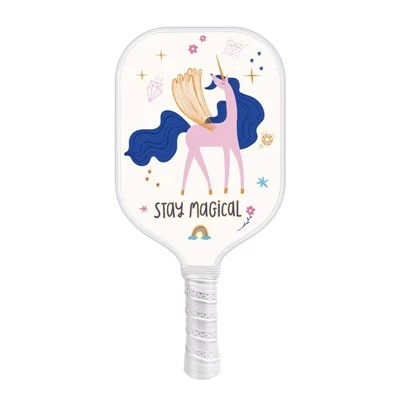
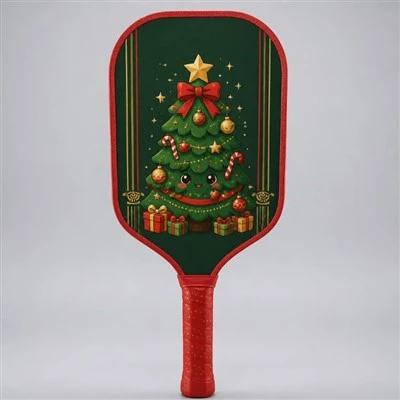
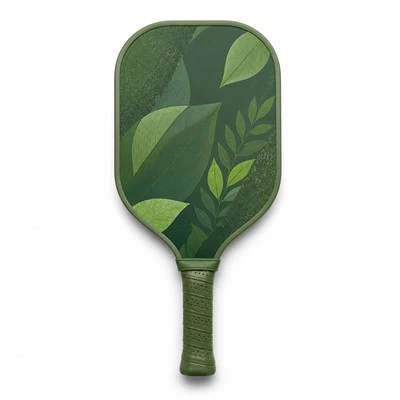
Pickleball paddles feature a solid, flat hitting surface with no holes. In 2026, modern manufacturing focuses heavily on raw carbon fiber faces and honeycomb polymer cores to maximize spin, control, and shock absorption. Top professional athletes on the PPA Tour demand the absolute peak of engineering. For instance, world #1 champion Ben Johns dominates the pro circuit using his signature JOOLA Perseus Pickleball Paddles, which utilize advanced charged carbon surfaces. Other elite players rely on high-performance gear showcased on Selkirk Sport to secure tournament wins.
- The Hitting Surface: Solid, textured composite or carbon fiber.
- The Weight: Lightweight, usually between 7.3 to 8.5 ounces (200-240 grams).
- Our Recommendation: To ensure your shots land with pinpoint accuracy like the pros, explore our premium collection of tournament-approved Carbon Fiber Pickleball Paddles.

Padel Rackets
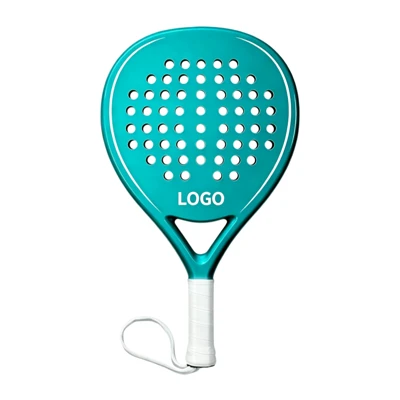
Padel rackets are designed for "Padel Tennis"-a sport played inside an enclosed glass cage. These rackets are much thicker, heavier, and feature a face filled with perforated holes to allow airflow through the frame.
- The Hitting Surface: Thick foam/EVA core with perforated holes across the face.
- The Weight: Significantly heavier, averaging 12.6 to 13.4 ounces (360-380 grams).
- Our Recommendation: If you are practicing on a glass-enclosed padel court instead of a pickleball court, make sure to browse our elite, high-performance range of Aerodynamic Padel Rackets built for explosive power.
3. Mastering Court Layout and Essential Equipment
To get a game started, you need to understand the field of play and the secondary gear items required for a seamless experience.
The Pickleball Court Layout
An official pickleball court measures 20 feet wide (6.10m) by 44 feet long (13.41m) for both singles and doubles. The net is hung at 36 inches (91.4cm) at the sidelines and 34 inches (86.3cm) at the center. The court is divided into three main zones:
- The Service Courts: The left and right quadrants behind the kitchen line where serves must land.
- The Baselines and Sidelines: The outer boundary lines of the court.
- The Non-Volley Zone (The Kitchen): The 7-foot (2.13m) rectangular area extending from the net on both sides. This is the most critical strategic zone on the court.

Balls and Footwear
The Pickleball: Unlike a tennis ball, a pickleball is made of molded, hard plastic with smooth perforations. Indoor balls feature 26 larger holes for better control on gym floors. Outdoor balls feature 40 smaller, precision-drilled holes to resist wind drift on concrete surfaces.
Footwear: Do not wear running shoes, as they lack lateral support and can cause ankle rolls. Always wear dedicated court shoes or tennis shoes featuring flat, durable rubber outsoles designed for frequent side-to-side movements.
4. Unpacking the Fundamental Rules of the Game
While pickleball rules are straightforward, a few unique regulations dictate how the game is played. Master these four basic concepts, and you can confidently join any open-play group worldwide.

The Serve and Scoring
- Underhand Only: The serve must be hit with an underhand motion. Upward arc contact must be made below your waist level, and the highest point of the paddle head must reside below the wrist joint.
- Crosscourt Delivery: The serve must travel diagonally across the net and land completely inside the boundaries of the opponent's opposite service court.
- Serving Team Scores: You can only score a point when your team is serving. Games are traditionally played to 11 points, and a team must win by a margin of 2 points.
- The Score Callout: Before every serve, the server must call out three numbers: Server's Score - Receiver's Score - Server Number (e.g., "5 - 3 - 2" means the serving team has 5 points, the receiving team has 3 points, and it is the second server of the rotation).
The Two-Bounce Rule
This rule prevents serving teams from rushing the net immediately for an unfair advantage. Following a serve, the receiving team must let the ball bounce once before hitting it back. Then, the serving team must also let the returned ball bounce once before playing it. After these initial two individual bounces have occurred, both teams are free to either volley the ball out of the air or play it off a bounce.
Navigating the "Kitchen" (Non-Volley Zone)
The 7-foot zone adjacent to the net exists to prevent players from executing unstoppable overhead smashes.
- No Volleys: You are strictly forbidden from hitting a ball out of the air while any part of your feet or body is touching the Kitchen line or standing inside the Kitchen zone.
- Entering the Kitchen: You can step inside the Kitchen at any time if the ball has already bounced on your side first. You must immediately exit the zone once you have completed your shot.
5. Basic Techniques and Winning Strategy
To transition from a beginner to an intermediate player, you must look past raw power and embrace tactical precision. Pickleball matches are won by forcing your opponents into making mistakes through smart ball placement.
https://www.instagram.com/reel/DNEU5XcxFjq/
https://www.tiktok.com/@enhancepickleball/video/7512106275182873899