What has made pickleball especially compelling over the past two years is not simply the buzz surrounding it, but the fact that it has begun to draw real talent and attention out of the tennis ecosystem. In late 2023, the PPA officially announced that Eugenie Bouchard, Jack Sock, Sam Querrey, and Donald Young would make appearances on the 2024 professional pickleball circuit @PPATour . By 2025, Andre Agassi had also made his professional pickleball debut and opened with a win @AP / @Reuters . In other words, this is no longer a stage in which a few retired stars are casually sampling the sport for novelty value; professional tennis players are beginning to treat pickleball as a legitimate secondary competitive pathway.
More importantly, this crossover has not unfolded quietly. It has been amplified continuously across the social-media layer. When @PPATour() announced the signing of Bouchard, Tennis.com noted that former ATP standout John Isner reacted on Instagram with: "Wimby finalist. Not bad @ppatour LFG!" @Tennis.com By 2025, @Tennis was also actively circulating news of Jack Sock, Donald Young, Sam Querrey, and Eugenie Bouchard appearing together at PPA events. That says a great deal: pickleball is no longer merely a side story adjacent to tennis; it is beginning to capture part of tennis's own media oxygen and conversation space.

1. From Tennis to Pickleball: Professional Players Are Entering a New Competitive Lane
That is precisely why the migration of professional players into pickleball should be understood as an industry signal rather than celebrity gossip. Elite athletes are often the first to sense where momentum is building: where the events are, where visibility is rising, where personal brand equity can still be monetized, and where audiences remain highly engaged. Jack Sock is now profiled by the PPA as a professional pickleball player @PPA Tour , while Genie Bouchard is explicitly presented as a tennis-to-pickleball crossover figure @PPA Tour. AP has likewise reported that Bouchard signed a three-year deal with the PPA while still keeping a foothold in tennis @AP(https://apnews.com/article/genie-bouchard-tennis-pickleball-07603d5c0b46f1e977c107f980aa4a68). Those labels are not incidental; they reflect a structural shift in the racket-sports marketplace.
What matters here is not just the names themselves, but what they represent. When professional athletes shift their attention, the market usually follows. Their movement suggests that pickleball is no longer living in tennis's shadow. It is building its own tour ecosystem, its own commercial appeal, and its own audience logic.

2. Beyond the Pros: More Everyday Players Are Picking Up Pickleball
And once the professional end of a sport begins to heat up, the participation base is usually not far behind. According to SFIA, 24.3 million people in the United States played pickleball in 2025, and the sport grew 171.8% from 2022 to 2025 @SFIA . SFIA and Pickleheads also stated in the 2024 State of Pickleball Report that participation increased across every age group @SFIA / Pickleheads . That means pickleball is not merely attracting younger players, nor is it relying solely on a retirement-oriented participation base. It is broadening laterally across the consumer spectrum.
When the lens shifts to age segmentation, the story becomes even more interesting. Publicly summarized participation data shows that in 2023 the largest pickleball age cohort was 25–34, while those 65 and older ranked second at 15.4% @Pickleheads. In parallel, AARP reported that among adults aged 50 and older, 9% say they play pickleball at least on occasion, compared with 7% for tennis @AARP . AARP later expanded its beginner-friendly pickleball clinic tour to 20 cities @AARP. This is no longer a scattered community phenomenon; it is a structured expansion strategy aimed at the 50-plus market while still retaining younger social players.

So why are more people over 40 and over 50 picking up a pickleball paddle? In many ways, the answer mirrors the logic behind the professional crossover. The barriers to entry are low, the court footprint is smaller, the social dynamic is stronger, and the sport does not carry the same technical intimidation or physical load profile as traditional tennis. AARP consistently frames pickleball in terms of health, enjoyment, brain engagement, and social connection @AARP/ @AARP. On the cultural side, readers tracking the social-media layer can also follow @thepickleballslam(), @agassi(), and @jack.sock, all of which reflect how closely tennis legacy, celebrity visibility, and pickleball promotion are now intertwined.
3. Tennis vs. Pickleball: What Does the Future Look Like?
But the most provocative question remains the same: Will the number of people who play pickleball eventually surpass the number who play tennis? In a global context, it is still too early to make that claim with confidence. But if the comparison is limited to the United States, the idea is no longer far-fetched. According to the USTA's 2025 participation report, U.S. tennis participation reached 27.3 million, while pickleball stood at 24.3 million that same year @USTA / @SFIA . Tennis is still ahead, but the gap has narrowed to roughly three million participants. Tennis continues to grow, but pickleball is expanding at a faster rate, which makes the possibility of pickleball catching up to-or even overtaking-tennis in U.S. participation a serious analytical proposition rather than a sensational headline.
It is also worth remembering that pickleball has already begun to leverage tennis's biggest stages. Reuters reported that the Australian Open introduced the AO Pickleball Slam at Melbourne Park for 2025 @Reuters. Around the same time, the PPA and UPA announced international expansion plans with events in Australia, India, Canada, Asia, and Europe @PPA Tour /@Reuters . Once a sport starts appearing at Grand Slam venues, borrowing a tour-style narrative from tennis, and attracting both former professional players and large numbers of middle-aged and senior recreational consumers, its growth story is no longer just about being a "hot sport." It is competing for the next central position in the broader racket-sports ecosystem.

4. Final Thoughts
So the real point is not that tennis is disappearing. It is that pickleball is beginning to capture part of the future growth that once seemed naturally destined for tennis. On the professional side, it offers a new competitive platform for retired players and those in the later stages of their tennis careers. On the mass-participation side, it is drawing in a large volume of newcomers-especially middle-aged and older players-through its lower barriers to entry and stronger social utility.
In the United States, tennis remains the larger sport for now, but pickleball has already evolved from "the new game on the small court next door" into a genuine rival competing with tennis for participants, facilities, attention, and commercial narrative. It has not overtaken tennis yet. But to insist that it never will is starting to sound less like analysis and more like reassurance from the old tennis establishment.
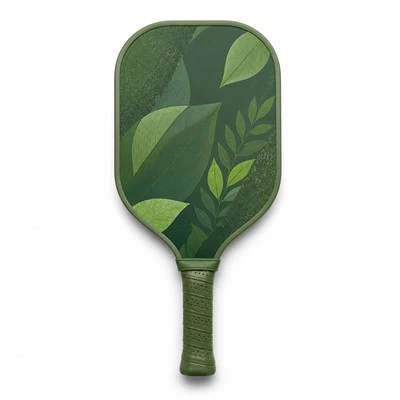
For readers interested in pickleball paddles and tennis rackets, further product information is available via the link below.
[Company Link]
Do you think pickleball could one day overtake tennis? Join the discussion in the comments under [Company Account].